Wednesday, March 7, 2018

Eilat Trip Summary

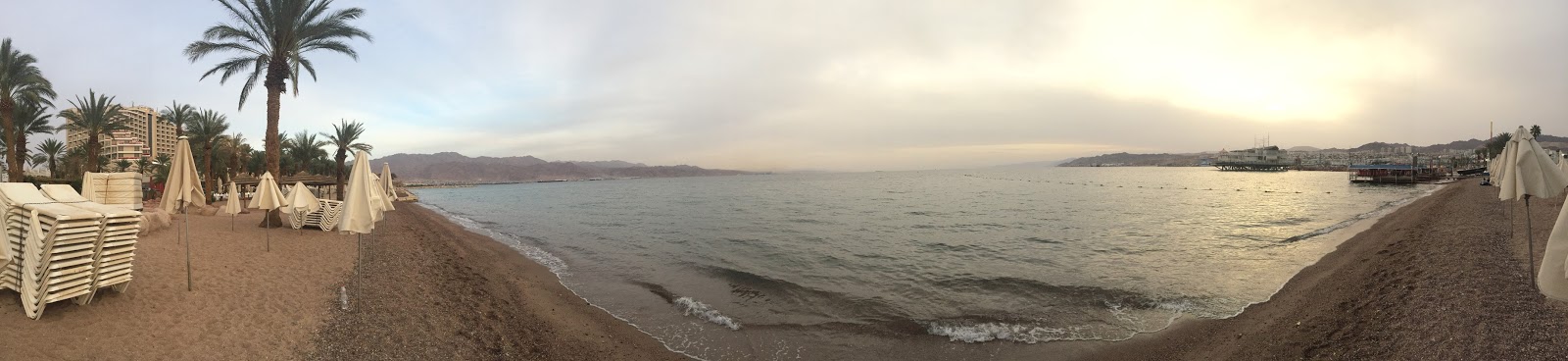
We had a great time on our Middle East adventure last week.  Eilat was the perfect place for some quiet beach time.  Especially last week when a cold blast of snow and freezing wind set record low temperatures across Europe.

Thanks to the Sibiřská zima, Siberian cold, Brno was -14℃ (7℉).  I definitely felt friends freezing back home while it was 28℃ (82℉) on the beach.


On Monday we went to Egypt and visited Saint Catherine's Monastery.

Egypt has long been a popular beach holiday destination for Czechs.  The number of tourists declined after the revolution in 2011 but have steadily increased the last couple of years.

On Wednesday we took our long day trip to Jerusalem and the Dead Sea.

I can definitely see going back to spend some more time at the Dead Sea.  Quite the experience.

Then we went in to Palestine to visit the Church of the Nativity in Bethlehem.
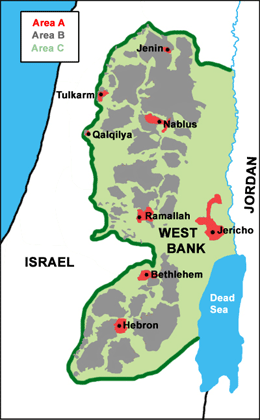
Something I didn't understand was that the Oslo II Accord actually divided up the West Bank into three different areas.  Area A is where the Palestinian Authority has administrative control, Area B is co-administered with Israel, and Area C contains settlements only controlled by Israel.

Israelis are not allowed to enter Area A.  This sign warns that it is both dangerous and against the law for Israeli citizens to enter Area A.


On Friday we took our tour to Petra.  It was even better than I thought it would be.  The carvings were so cool.  I wish we had more time to really explore Petra but we hit the major highlights.  I'm glad that we didn't stay over though because Jordan is ridiculously expensive.

Since 2013, Israel no longer stamps your passport.  Instead you receive a paper ticket every time you enter or exit the country which you hold on to.  There are several counties which won't let you enter if there's any evidence in your passport that you've been to Israel.

Taba visa stamps
The thing is that Egypt and Jordan do stamp your passport.  So there's now evidence in my passport that I used the Taba border crossing in Egypt, and since the only country that one can get to from here is Israel, which means it's pretty easy to figure out where I've been.

Israeli border crossing to Jordan
It's the same story with the Jordanian border crossing.  My passport now won't let me enter Iran, Iraq, Kuwait, Lebanon, Libya, Pakistan, Saudi Arabia, Sudan, Syria, or Yemen.

Aqaba, Jordan, across the Red Sea
While not immediate travel destinations I would like to eventually go to Iran and Lebanon.  I'll either have to get a second U.S. passport, which will only be valid for two years, but won't show evidence of having been in Israel.  Or I wait until I eventually get a Czech passport.


The rest of the time we just relaxed on the beach and enjoyed our time in Eilat.

Mall security


Mall security is no joke in Israel.  According to the law, you can enter only a shopping centre after clearing security.  Your bags will be searched and you go through a metal detector.  It's quick and easy and you don't have to remove your shoes like at an airport.

The biggest surprise actually came when we left.  Ryanair says to be at the airport at least two hours before your flight.  However, Israeli airport regulations state that passengers should arrive at least three hours prior to your flight in order to clear security.  It took us about 2,5 hours to make it to the gate.

First you get in line to talk to a security who asks a few questions and looks through your passport.  I think there's a bit of racial profiling that goes on as well.  We were then split up and asked the same questions again separately.  It didn't seem to be a problem that we had gone to Egypt or Jordan but security had lots of questions about out visit to Morocco a year ago.  Why did I go to Morocco?  Do I know anyone there? What did I do?  Did I meet anyone there?  It took a while to explain that it was just a day trip and again, a year ago.

"2" is low risk but "6" is the highest risk
After about five minutes they put a yellow sticker on my passport and I could then get in the queue for baggage inspection.  All of your bags go through a screening machine.  Some people were told to remove iPads but I wasn't so I left it in the bag.  Depending on the number on the yellow passport sticker, some people had to then go to another bag check where they had open their bags and watch an official inspect every item.  I'm glad that this didn't happen to me.  Then you go to the airline counter and check in your bag.  After this you then go through "normal airport security" where you remove your liquids from your carry-on, take off your shoes and pass through metal detectors.  Then you go to passport control and then finally you are cleared to go to the gate.  Super thorough but you can definitely feel safe at an Israeli airport.

Monday, March 5, 2018

Eilat, Israel

Eilat, אֵילַת, is the southernmost city in Israel.  The earliest settlements in Eilat were established around the 7th century BC but as an Israeli city it was founded in 1951.  Today the city is home to just over 50,000 people.

The city is south of the Negev Desert.  It's on the northern tip of the Red Sea, wedged between Egypt and Jordan.  On a good day you can see Saudi Arabia across the Gulf of Aqaba.


Eilat is a popular beach resort with an average of 360 sunny days each year.


The 1947 UN Partition Plan designated the Eilat area as part of the Jewish state.  The British Umm Al-Rashrash police post was taken in Operation Uvda on 10 March 1949 without a fight.  The 1949 Armistice Agreement formally granted Eilat to Israel.

The Ink Flag sculpture commemorates the capture of the police post during the war.  When the Negev Brigade discovered they didn't have an Israeli flag, soldiers made a flag by drawing ink stripes on a sheet and sewed on a Star of David from a first-aid kit.


The Artists Gallery is dedicated to the work of local artists.


The Eilat Museum is all about the history of the city of Eilat.  It's small but interesting.  But there's not much history wise since around the mid-1990s.


Behind the museum is a big blue pyramid.  It's the former IMAX theatre which is no longer open.


The Coral World Underwater Observatory is the largest public aquarium in Israel.  It was founded in 1974 and it is home to over 800 species.


In 1989, there was a Sculptures for Peace exhibit.  One of the pieces still on display in a city park was by Czech Artist Jan Koblasa.  He was a founding member of the Czechoslovak post-war art scene.  In 1971, he defected from Czechoslovakia and was sentenced in absentia to nine years in prison for illegally leaving the country and much of his work was hidden in custody.  He passed away in 2017.

Eilat is a small town but it's a great place to go to just to get away.  It's possible to visit Jerusalem and the Dead Sea.  It's also quite easy to cross in to Jordan to visit Aqaba or tour Petra.  Or you can cross over to Egypt to visit St. Catherine's.

Of course you can also just hang out at the beach which is totally awesome!  You can't beat beat 28℃ (82℉) on the beach, especially when it's -14℃ (7℉) in Europe.  Though I'm not so sure I'd want to visit in the summer when it reaches +40℃ (+104℉).

Sunday, March 4, 2018

Petra Tour, Jordan

On Friday we took a day trip to Jordan in order to visit Petra.  From Eilat, we crossed the border to Jordan where we received our tourist visas.  From there our bus drove by Aqaba, العقبة, which is visible from Eilat, just across the Red Sea.  Aqaba was founded in 4000 BC and is home to around 150,000 people.
King Hussein, King Abdullah II, and Crown Prince Hussein


We then drove through Wadi Rum, which is the country's largest valley cut from sandstone and granite.  Wadi Rum is 60 km (37 miles) east of Aqaba.

We made a brief stop near Ma'an, معان.  It was founded sometime between the 2nd-4th century BC.  It was a perfect stop for some great views of the desert.


Petra, البتراء, is 138 km (85 miles) from Eilat.  It is an archaeological city that was built possibly as early as the 5th century BC.

Petra was originally known as Raqmu.  It was the capital city of the Nabataean kingdom making it a regional hub for trade.  By 700 AD the city was abandoned.

In 1812, the city was rediscovered by a Swiss explorer.  Petra is famous for its rock-cut architecture.  In 1985 it was listed as a UNESCO World Heritage site.

After leaving the visitor centre, it is about a 600 metre walk (or optional horse ride) to the Siq which is a narrow gorge that leads to the ancient city.  The Siq is about one km long.  There are various carvings to look at along the way.

At the end of the Siq, the first thing you see is the treasury which is carved in to the rock.

Other sites to see include various tombs, a sacrificial palace, and an open theatre.  We only had about 1,5 hours to see as much as we could.  In a perfect world we could have spent two to three days exploring everything here.


In a 2007 poll, Petra was named one of the New 7 Wonders of the World. 

Thursday, March 1, 2018

Church of the Nativity Tour, Palestine

Bethlehem, بيت لحم‎, is located in the West Bank, Palestine.  It's about 10 km (6,2 miles) south of Jerusalem.  The city was founded around 1400 BC and today is home to about 25,000 people.  The city is famous as the birthplace of Jesus Christ.


After our main tour, a smaller group was taken by bus in to Palestine to visit the Church of the Nativity.


The Church of the Nativity is a basilica that was completed in 339 AD.  The church was built over the cave where Jesus was born.

It was destroyed by fire in the 6th century.  A new basilica was built in 565 AD.

The church is managed by the Greek Orthodox, Armenian Apostolic, Roman Catholic, and Syriac Orthodox churches.  In 2012, it was listed as a UNESCO World Heritage site.


Major renovations began in September 2013.  I don't know how long it is expected to last but the completion date looks quite far off.


Beneath the church is the Grotto of the Nativity and an alter marks the spot where the Virgin Mary gave birth to Jesus.  The precise spot has a 14-point silver star on the floor.

After visiting the church we made our way back in to Israel where we met up with the rest of the tour group and headed back to Eilat.  It was a very long day but well worth it.

Wednesday, February 28, 2018

Jerusalem and Dead Sea Tour, Israel

This morning we set off from Eilat on a tour to Jerusalem and the Dead Sea.

The southern part (the Israeli section) of the Dead Sea is 220 km (137 miles) from Eilat through the Negev desert.  Along the way we passed Mount Sodom and the rock that is said to resemble Lot's wife.

The Dead Sea, יָם הַמֶּלַח, in Hebrew is Yam ha-Melah which translates to the Sea of Salt.  It's a salt lake bordering Israel, Palestine, and Jordan.


At 394,6 metres (1269 feet) below sea level, it's the lowest point in the world.  It is super salty!  It's 9.6 times more salty than the ocean which makes it impossible for plants and animals to survive which is why it's called the Dead Sea.  Because it is so salty you can't really swim.  Since you can't sink you just pretty much float there.

It's an awesome experience.  But when you get out you notice that the water has a sort of greasy feel to it.  Also be sure to wear waterproof sandals or aqua socks because the the salt crystals on the shore are jagged and will hurt your feet getting in and out of the water.

After a shower and change we got back on the bus and headed to Jerusalem which was about an hour's drive away.


Temple Mount
We only had a couple of hours in Jerusalem.  Our guide hit the major sites and showed us the Church of the Holy Sepulcher and the Wailing Wall.

We saw the Temple Mount at a distance but some day I actually want to go inside it.

The Church of the Holy Sepulchre is jointly managed by the Greek Orthodox, Armenian Apostolic, and Roman Catholic Churches, and it's considered the holiest site in Christianity.  It contains the last four Stations of the Cross, was the spot where Jesus was crucified and is where he is said to have been buried.

Jerusalem's municipality believes that tax exemptions have been incorrectly given to the church-owned commercial properties, which are not places of worship, so they want their tax revenue which I heard was several million dollars.  In protest, the church leaders closed the Church of the Holy Sepulcher on Sunday.  Obviously this didn't go well with all of the tourists.  After the mayor backed down, the church was reopened at 4 AM this morning.  The church was extra busy this today as everyone was trying to get in.  There were lots of reporters there interviewing various church leaders.

Here's a video I found out on YouTube about the situation.

©Al Jazeera

In the late afternoon we took an optional tour to Bethlehem to see the Church of the Nativity.